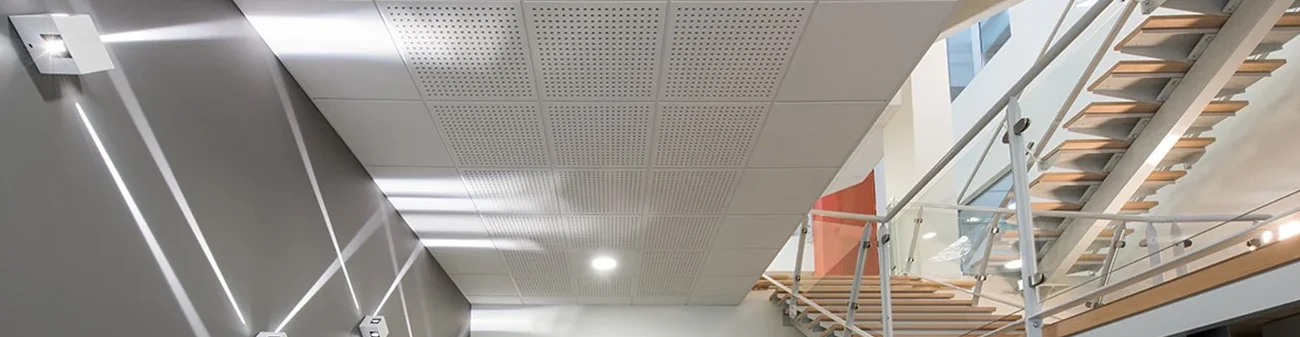
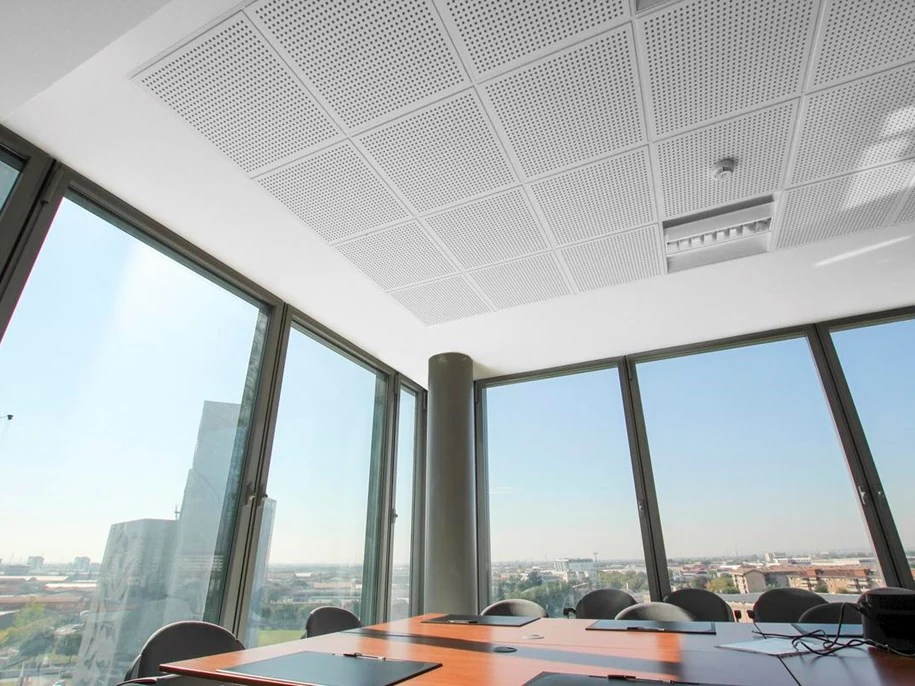
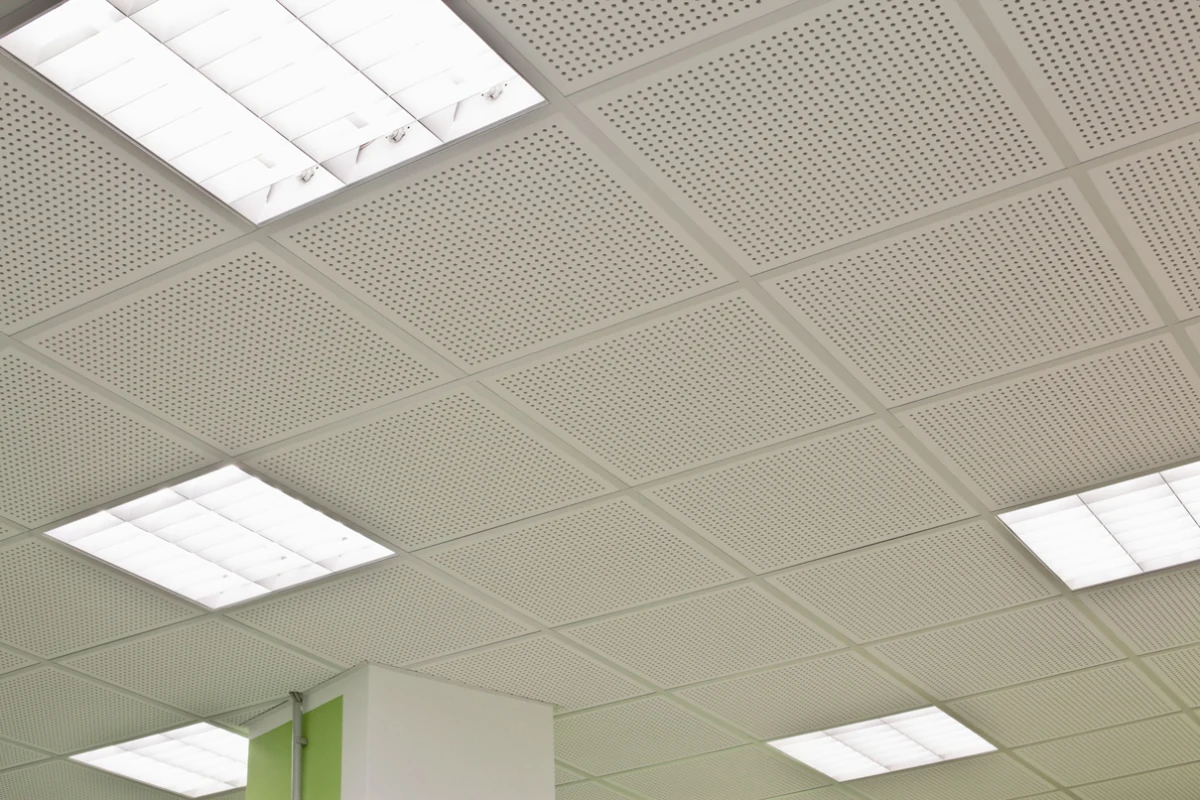
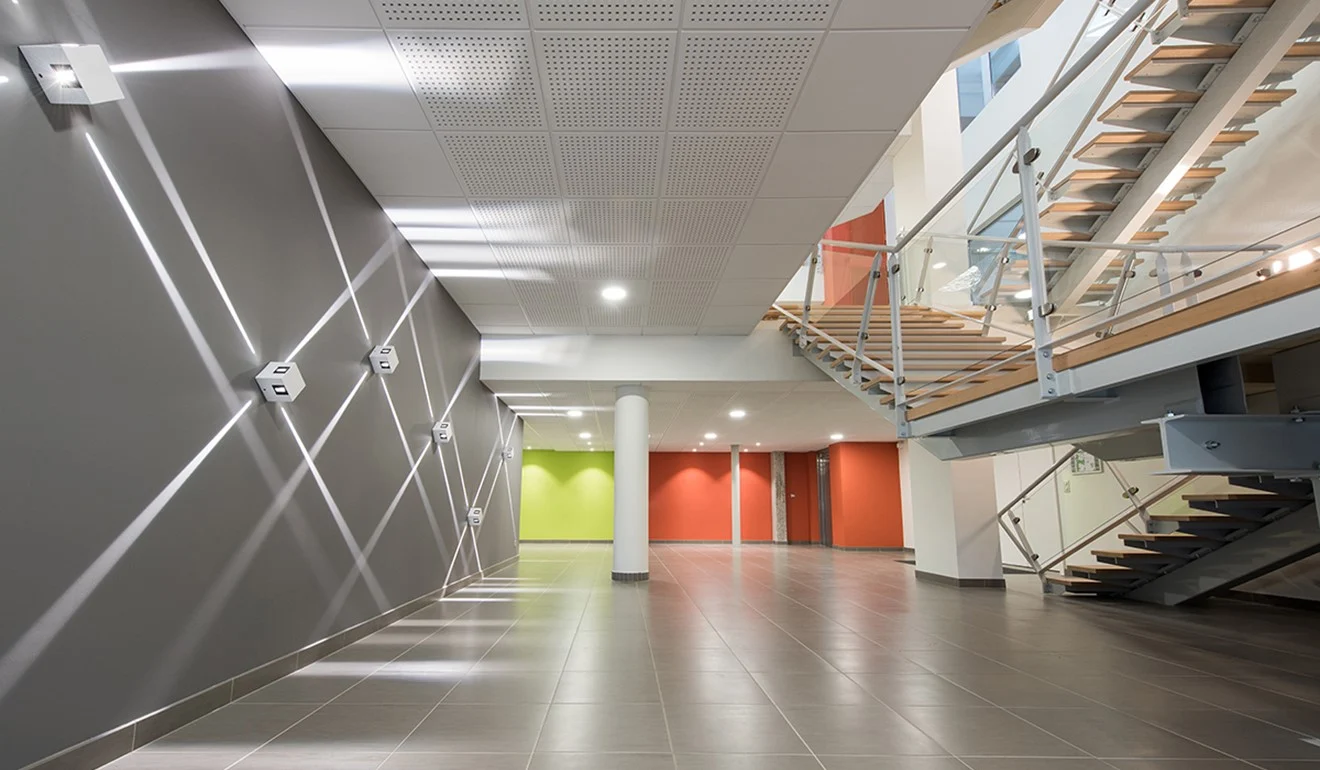
Gypsum ceiling tiles combine a robust, paintable surface with access to the services above the ceiling. Perforated panels with an acoustic backing help reduce reverberation. We offer Knauf Danoline, Gyptone and Vogl systems with a choice of edge details and perforation patterns.
Gypsum ceiling tiles in a meeting roomPerforated tiles and integrated lighting
Edge details
The edge determines how much of the grid remains visible and the appearance of the joints between tiles. The options below include exposed, recessed and concealed grids, together with a screw-fixed edge.
Round, square, slotted and hexagonal openings give the ceiling different visual effects. Plain, unperforated tiles can be used for perimeter areas and around light fittings. Select a pattern to see its shape and key dimensions.
The available edge, perforation and panel-size combinations depend on the individual product. We confirm compatibility and availability with your quotation. The drawings illustrate the edge principle and perforation shape. Panel dimensions, pattern layout and installation details follow the selected manufacturer’s system.
Continuous gypsum and seamless acoustic ceilings
A continuous gypsum ceiling is screwed to a supporting framework and finished as a single surface. Acoustic versions use perforated gypsum panels and a suitable acoustic backing. The full ceiling is not demountable; access panels are planned where required.
Gyptone
Gyptone BIG
Gyptone BIG is a range of large-format acoustic gypsum panels. Panels are screwed to a framework and the joints finished to form a continuous surface without a visible supporting grid.
Knauf Cleaneo Akustik panels with filled joints create a continuous perforated ceiling. The perforation and system are selected to suit the room’s acoustics and the intended design.
VoglFuge panels are fixed to a CD framework. Edge-to-edge installation and the VoglFuge joint system form a continuous acoustic surface, with round, square and mixed-size perforation patterns available.
Perforated gypsum panels can also add sound-absorbing surface to walls and reduce reverberation. They are suitable for meeting rooms, classrooms, auditoriums and corridors. We select the perforation, framework and acoustic backing to suit the use of the room.